
SME Funding Summit Returns for Second Year

SME Funding Summit Returns for Second Year

SME South Africa is proud to announce that the SME Funding Summit will be returning in 2026. The second edition will take place on the 11th of June, 2026, and promises to have a full day of funding-related activities, such as panel discussions, a funding-focused keynote address, and traditional and non-traditional funders exhibiting.

“We will once again be hosting the SME Funding Summit,” announces Velly Bosega, CEO of SME South Africa. “We have positioned this event as the premier funding event that delivers relevant funding advice and guidance to small to medium-sized enterprises across the country.”

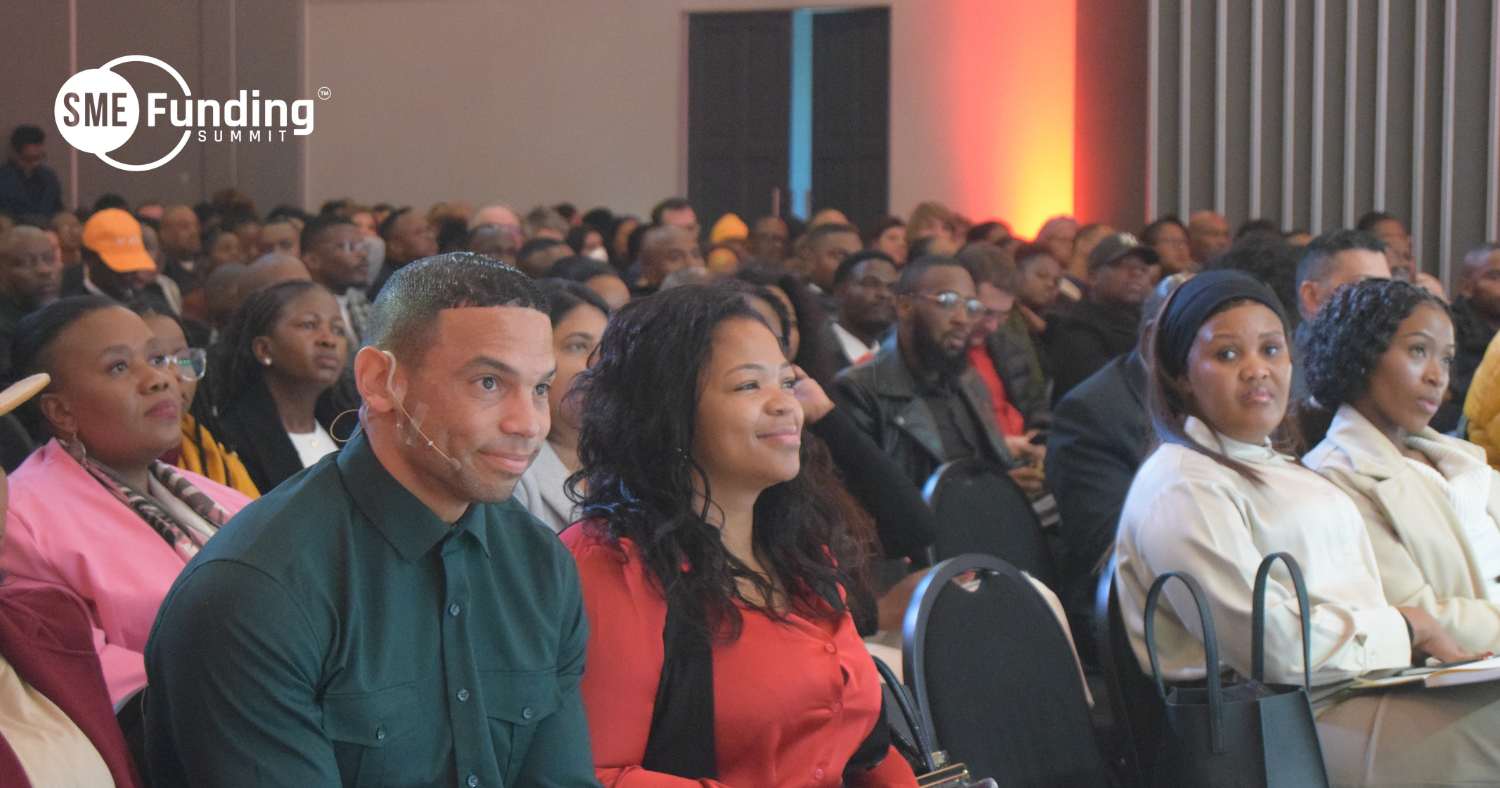
Hosted in the heart of Gauteng, entrepreneurs from across South Africa gather to network, learn, and improve their chances of securing funding.

The 2026 edition promises to be bigger and better, featuring more exhibitors, expert speakers, and actionable insights designed to educate, inspire, and help entrepreneurs become funding-ready.

What To Expect

Attendees can expect to see a similar format to the previous year’s event. A powerful keynote about the funding landscape will take place, as well as multiple panel discussions and presentations.

Topics that will be addressed throughout the day include:

  • Diverse Funding Pathways
  • Targeted Funding Opportunities
  • Funding Readiness and Compliance Foundations
  • Government and Public-Sector Funding

“Some of the agenda items that attendees can expect to see again this year are a keynote centred around the South African Funding landscape, exhibitors from both traditional and non-traditional funding spaces and powerful networking opportunities,” said Bosega. “Based on the feedback from exhibitors and attendees, SME South Africa will be adding a few exciting surprises to the itinerary, but we will only be sharing this news closer to the time.”

Last year’s attendees agreed that the format drives transformation, empowering entrepreneurs with knowledge, mentorship and insightful discussions. This year, the data-driven event that connects SMEs with funders aims once more to address the common issues that plague entrepreneurs when it comes to funding.

Ticket Sales are Open

Tickets are officially on sale, with an early-bird discount for a limited time. Discounted prices are R 699 and give attendees full access to the SME Funding Summit and all activities on the day.

The event will be hosted at The Empire; Conference and Events Venue.

“We encourage funders who are interested in exhibiting to reach out to us,” he adds. “Brands that would like to partner with us are also welcome to reach out to us,” he concludes.

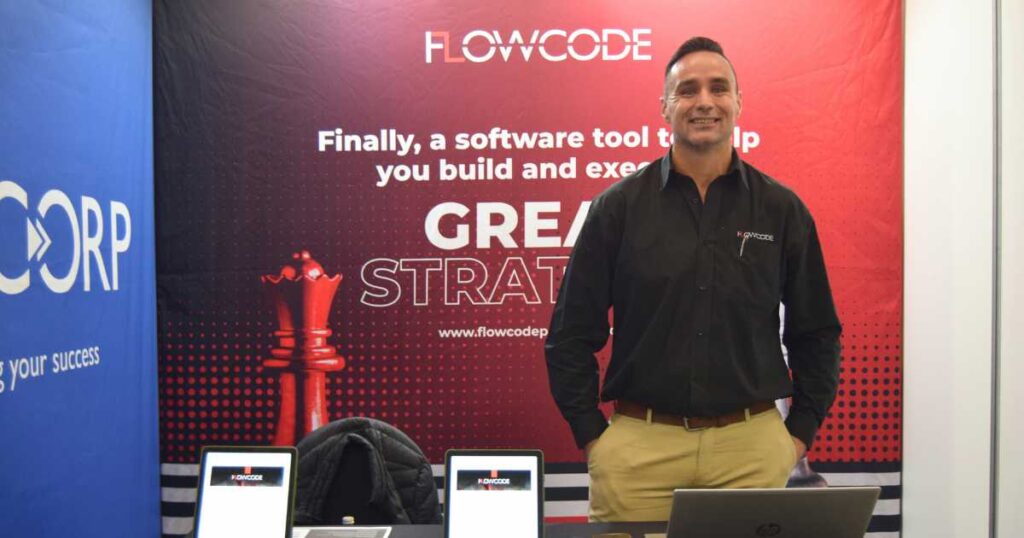
Flowcode Sharpens SME Business Strategy

Flowcode

When it comes to growth for small to medium-sized enterprises (SMEs), a robust business strategy can be the difference between success and failure. Business strategies are critical for SMEs that want to survive the ups and downs of the business world. Most SMEs will develop their own strategies. However, there is a platform purposefully built to ensure SMEs create comprehensive business strategies, Flowcode.

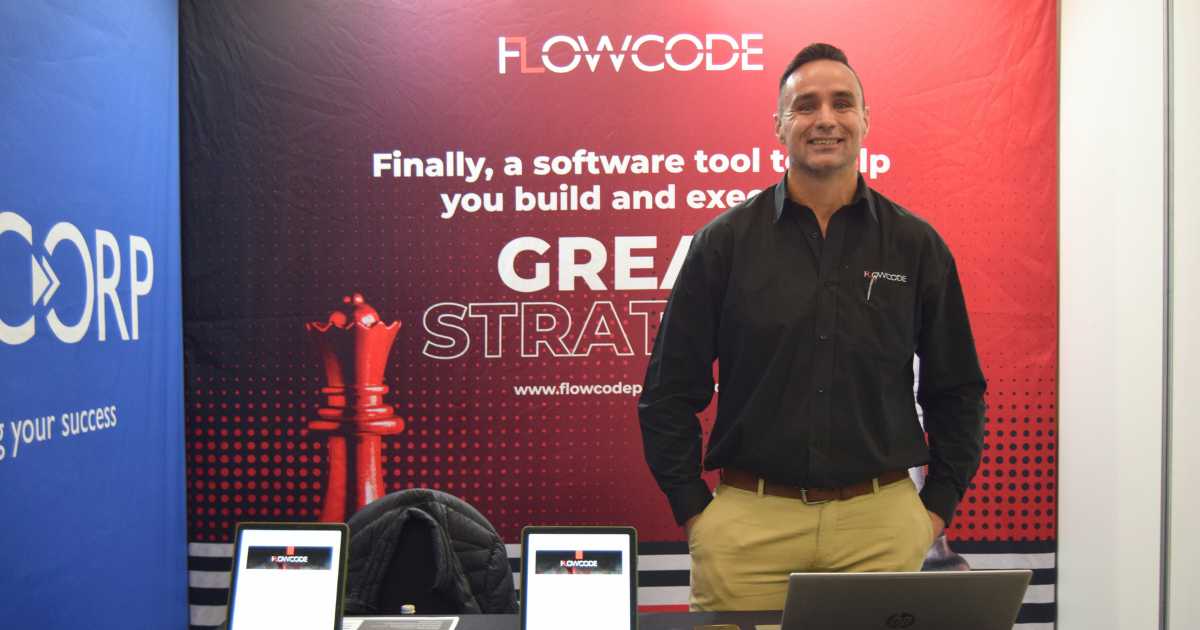
At the 2025 SME Funding Summit, Flowcode spoke on the importance of providing SMEs with a platform that enables them to build their companies from the ground up while leveraging digital platforms.
“We are here to help SMEs and entrepreneurs alike develop their business strategies. We give them a business coach and software that they can use to actually build their strategy, develop their strategy and help scale their business,” said Johnathan Ducie, Sales Lead at Flowcode.

What is a Business Strategy?

A business strategy is a roadmap that guides an organisation’s decisions, actions, and resource allocation to achieve its vision and mission. Key elements of a business strategy are:

  • Mission: A concise statement that defines the company’s purpose and core values.
  • Vision: A forward-looking statement outlining the company’s aspirations and desired future state.
  • Values: Principles that define how the company operates and interacts with its stakeholders and form the foundation of the company’s culture.
  • Goals: Specific, measurable, achievable, relevant, and time-bound (SMART) objectives that the company aims to achieve within a certain time period.
  • Competitive Advantage: Unique qualities or capabilities that distinguish your company from competitors.

What is Flowcode?

The Flowcode platform enables SMEs to create comprehensive business strategies. The platform uses a combination of advanced strategy tools with effective execution management to enable scaling with ease.

Some key features of the platform include:

  • Develop Business Strategies: Flowcode’s modular platform empowers SMEs to create business strategies effortlessly.
  • Team Collaboration: Flowcode enables a connected workforce by integrating external calendars, file sharing, and engagement tracking.
  • Real-time Insights: Monitor progress with analytics and reports for better decision-making.
  • Tailored Support: Flowcode offers each customer a trained business coach/consultant to help SMEs build and execute their business strategy.

How Flowcode Helps SMEs Unlock Funding

For many SMEs in South Africa, access to funding is a challenge. Some SMEs do not have the ‘data’ to highlight business growth and financial status, which can make demonstrating business viability an issue for them and their potential funders.

By leveraging Flowcode, SMEs have the opportunity to show growth through a digital platform. Because Flowcode monitors business growth and performance, funders can use this data to monitor how the business is performing and develop more tailored funding vehicles for SMEs.

“Where Flowcode can step in is to actually show you how to build a business, to actually grow your business, to make your business scalable. Then you can take that whole model and show somebody who’s a funder to go look at what you’ve built and look at what I’m doing from one source,” Ducie said.
For SMEs, a platform like Flowcode is not only there as an ‘ideas machine’, but also a comprehensive business development platform aimed at helping founders become more strategic thinkers, scale their businesses and navigate the tricky parts of owning a business.

“SMEs need to know that Flowcode is there to calm the chaos. We calm all the chaos for entrepreneurship, and we are for the entrepreneur,” Ducie explained.

Businesses Suited for Flowcode

The types of businesses that need a platform like Flowcode include:

1. Ready to Scale
Flowcode is ideal for businesses on the verge of growth that are looking for a platform that provides a clear roadmap to effectively and sustainably scale.

2. High-growth Companies
The platform is ideal for SMEs that are navigating a period of rapid growth. Flowcode ensures that strategic alignment and efficiency in execution are managed to maintain momentum.

3. Businesses in Turbulence
Flowcode not only helps businesses experiencing growth and success, but also those facing challenges. The platform provides proven strategies to help organisations break free from the ‘growth-collapse’ cycle and ensure they stabilise and thrive.

“We are looking to help the businesses that have an idea, and they’ve been running their business, but still need structure. Also, we want to help those struggling with operational challenges. We provide a business coach who can help them navigate any tough times,” Ducie concluded.

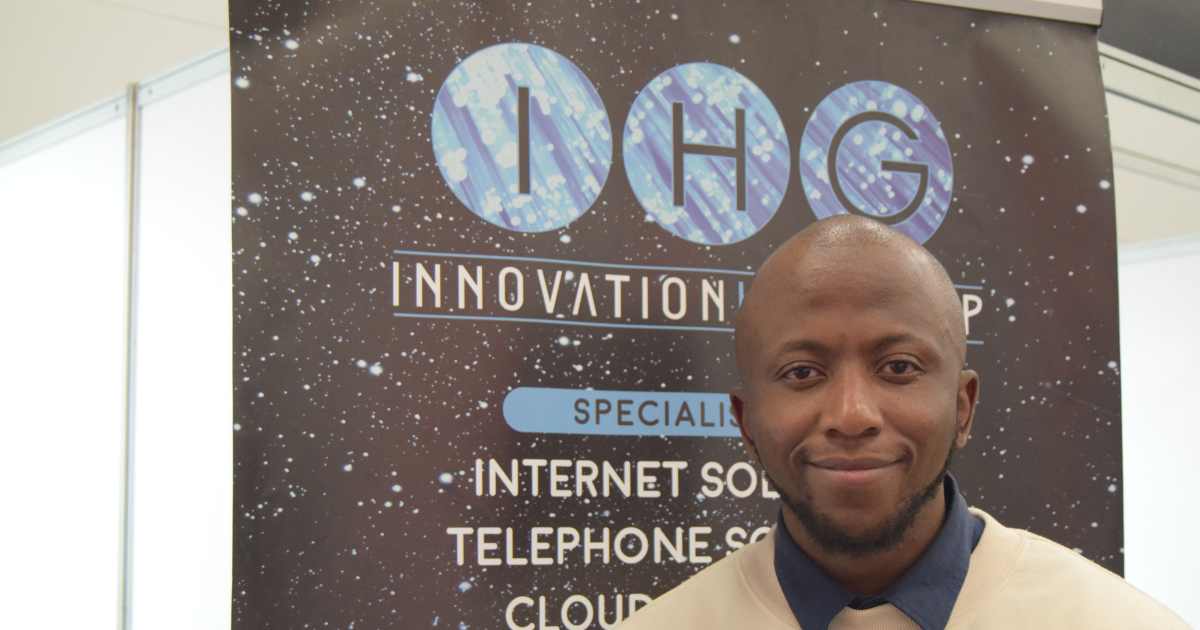
2025 SME SA Funding Summit: Innovation Hub Group

2025 SME SA Funding Summit: Innovation Hub Group

As small to medium-sized enterprises (SMEs) navigate digital transformation, the biggest hurdle can be the cost and finding the right digital business tools. Digital business tools are important because they enable SMEs to focus on running their business and increase profits, while technology takes care of the mundane tasks.

One of the more critical aspects of digital transformation is cybersecurity. Cybersecurity is important for all businesses to ensure that the business and its customers are protected. At the 2025 SME SA Funding Summit, Sean Twala of the Innovation Hub Group highlighted that cybersecurity is a growing risk for SMEs in South Africa.

“Businesses that have low turnovers or smaller businesses don’t usually take cybersecurity as something seriously. We are here to take care of SMEs and ensure their compliance with regulations and keep their businesses safe,” Twala said.

What is Cybersecurity for SMEs?

Cybersecurity is a foundational element of digital transformation for SMEs. It is the practice of protecting digital systems, networks, data and software from cyber threats like attacks, damage, data theft or unauthorised access.

Integrating cybersecurity measures from the start is crucial and involves more than just tools. SMEs need to train their employees, leverage multi-factor authentication and practice regular security updates.

SME founders might not always be aware of the best cybersecurity practices, and that’s where the Innovation Hub Group is helping.

What is the Innovation Hub Group?

The Innovation Hub Group is an end-to-end ICT solutions provider. The company’s services vary from ICT infrastructure deployment to enterprise internet and telephony solutions. Under its services, the company includes:

IT Solutions

End-to-end IT solutions that are tailored to match the needs of your business, whether through flexible monthly SLAs or on-demand support. IT solutions include desktop maintenance, firewall maintenance and IT hardware and installation. The Innovation Hub Group’s IT solutions begin at R189 per month for desktop maintenance up to R650 per month for server maintenance.

Server Hosting

The company’s server hosting solution enables users to access resources from anywhere, on any device. This helps reduce the need for SMEs to run expensive hardware infrastructure on their local network. Server hosting solutions are from R699 per month.

Web Hosting

Web hosting allows SMEs to post a website or web page on the Internet. The Innovation Hub Group’s web hosting services are secure and affordable, with a focus on hosted e-mail. Through hosted e-mail, SMEs can use Office 365, Microsoft Exchange, IMAP and POP. E-mail hosting is from R69 per month.

Internet Solutions

The Innovation Hub Group provides a range of Internet services, including fibre, microwave, wireless and LTE. The Internet solutions range from R299 per month for LTE and from R899 per month for business fibre.

Software Services

Software is important for digital businesses because it performs automated tasks, responds to hardware and responds to data requests from other software. The Innovation Hub Group’s software solutions are tailored based on your workflow and business needs. Software suites cost from R69 per month and vary, including customer relationship management (CRM) to remote management.

Power Back Up

With loadshedding causing so many operational disruptions for SMEs, backup power solutions are important. The Innovation Hub Group offers 3KVA 24V and 5KVA 48V backup power solutions, ensuring company PCs, servers and equipment with stable power during loadshedding. Backup power solutions are from R1599 per month for 24V and from R2219 per month for 48V.

Security Solutions

The security of your SME is very important to its operations. The Innovation Hub Group’s extensive cybersecurity solutions are suited for SMEs looking to secure their systems and data. The company’s security solutions leverage machine learning and automatic threat response technology to ensure data is secure. In terms of cost, its antivirus solutions are from R250 per annum.

Financial Services

Access to different types of funding is not always easy for SMEs, and with so many elements of the business needing capital, a simple loan won’t do the trick. The Innovation Hub Group offers flexible financing solutions to SMEs looking to procure hardware, software, maintenance and other services. The company’s financing solutions are tailored to each business, and the repayment period is flexible.
“We know that SMEs are looking for funding, but we want to make sure digital transformation and cybersecurity are affordable for them. Once they get their funding, we want them to see us as an affordable and trustworthy partner to streamline their businesses,” Twala concluded.

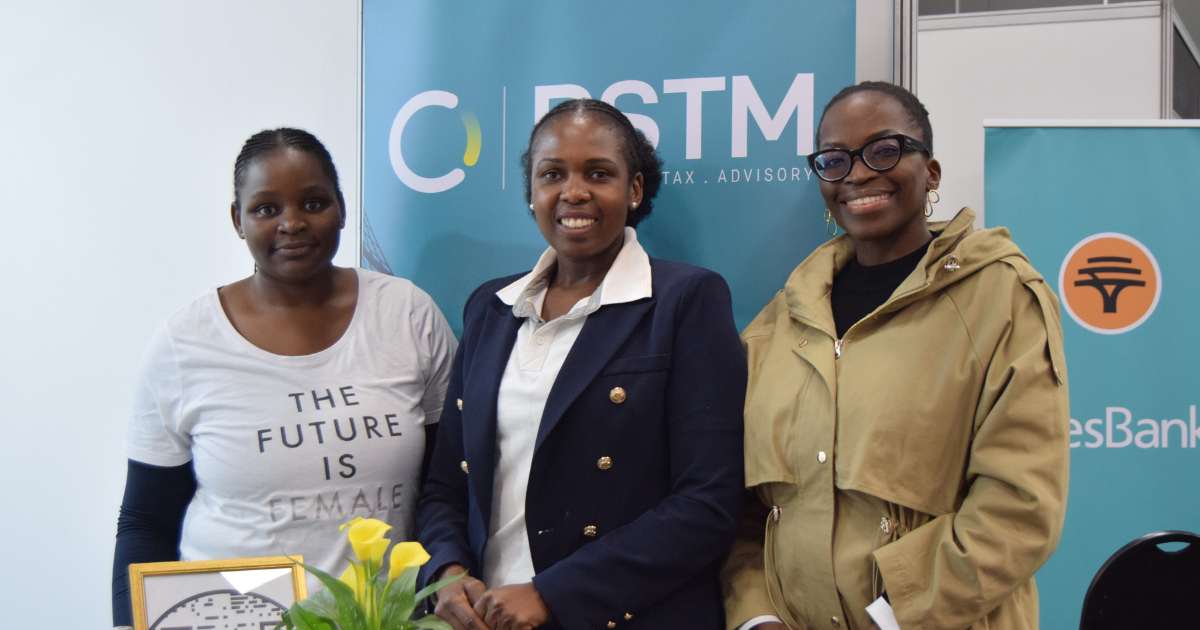
PSTM Helps SMEs with Accounting Compliance

The 2025 edition of the Funding Summit saw many businesses across the SME landscape attend, aiming to liaise with small business owners and entrepreneurs who can benefit from their services. Included among these businesses were alternative funders, traditional funding, and tax and compliance industries. One such brand is PSTM.

“We are accountants helping SMS with compliance, financial statements, their taxes, wealth management and their business structuring,” says Phuthanang Motsielwa, representative of PSTM.

“It was important to us to be at the 2025 Funding Summit because we follow SME South Africa and we read their reports,” Motsielwa expands. “We understand the struggles that SME’s face, and a lot of things they struggle with are their compliance.”

This fact was noted by many of the funders on the day, as well as the speakers.

“They’re not finance-ready,” she continues. “There are a lot of issues that SME South Africa writes about, and those are very relatable to us as a business.

“So, being present is vital partly because SME South Africa is speaking to our audience, our target market, and that’s why it was important.”

Reaching Those Who Matter Most

Motsielwa elaborates that not only has the day allowed them to educate SMEs, but it has also helped them expand their mailing list. From a marketing perspective, it has allowed them to have face-to-face interactions with their target market. “The people that we want to serve – the people that are actually looking for accountants – that can help them to grow and not just look at whether or not someone filed their tax returns.”

PSTM is actively seeking businesses that it can support to grow and ultimately enhance the value of the South African economy.

One benefit of attending or participating in live events is that it allows brands and potential clients to connect with each other. It creates a platform that does more than just offer networking opportunities – it drives dialogue with all stakeholders within a particular industry. Furthermore, this one-on-one connection means that a personal connection can be made between the entrepreneur and the brand with the solution. In essence, the entrepreneur is more than just a name. They become a face with a backstory and a need for assistance.

Helping SMEs Take Back Control

“I think you are in control of your own destiny,” Motsielwa says. “A lot of the time, you like to talk about what’s wrong, what’s not going right, etc, but I think if you’ve taken the step and you’ve said that you are going to be an entrepreneur, then it is quite different. You need to take control of your own life and your business. If you don’t like the feedback that you’re getting from your business, then you need to reach out to someone who can help you. You need to make sure that you get the right level of support.

“I think there are very good people exhibiting here,” she adds. Her wish for business owners is that they gather their teams to attend the next summit. “Make sure that when you walk away from the next summit, you’ve got those people that you need to go back and speak to once the event is over.”

If you’d like to know more about governance, stay tuned to see the webinar about Governance for SMMEs by PSTM. It will take place on 2 October 2025, at 11:00. You can register via the link on the SME South Africa Webinar page.

The next SME Summit will be announced soon, so keep your ears and eyes open so you don’t miss a thing.

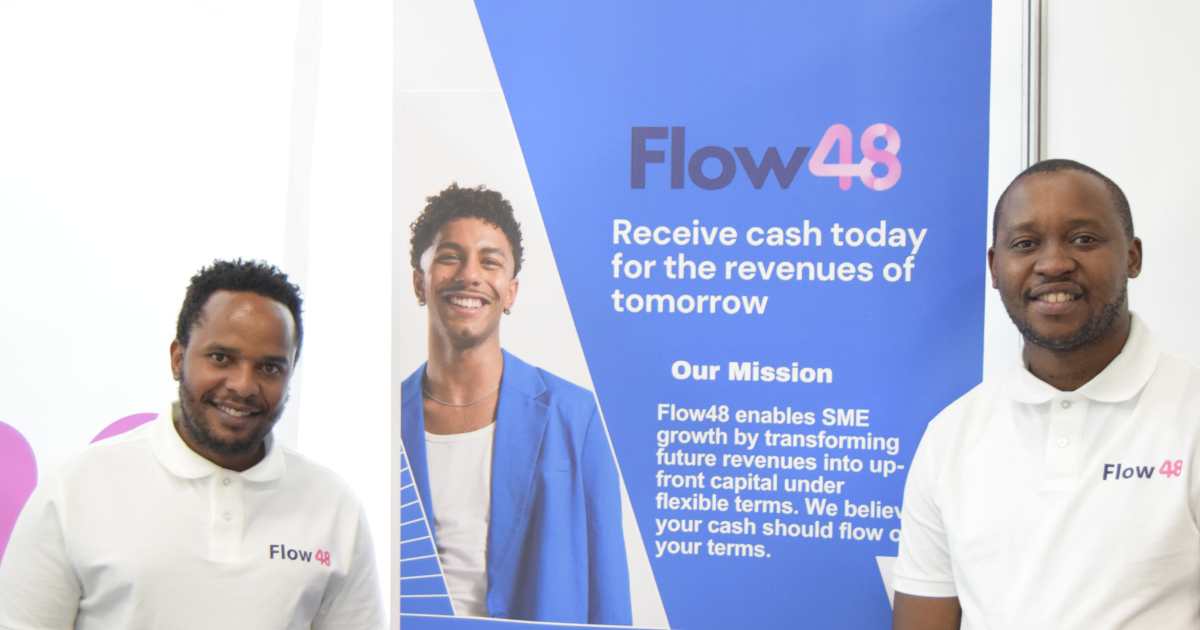
Flow48: Alternative Funding Solutions for SMEs

Flow48 Providing Alternative Funding Solutions for SMEs

The massive funding gap faced by South African entrepreneurs has led to a demand for alternative funding solutions. Events like the SME South Africa finding summit aim to not only help entrepreneurs understand what they need to qualify for funding, but also to expose them to other forms of funding.

Without exposure to alternative funders, SMEs are constantly running after traditional funders, such as banks. One of the alternative funders that was present at the SME South Africa Funding Summit is Flow48. We got to visit the Flow48 exhibition stall to gain insight into who they are and how they serve the SME market.

Additionally, we’ll dive into the importance of alternative funding and how SMEs can strategically use alternative funders for business growth.

What is Flow 48?

Flow48 is a startup fintech company, originally from the UAE, but then, because of gathering the amount of SMMEs that are in South Africa, the company saw the need to penetrate the South African market.

The company was originally founded in 2022 and then branched out into South Africa in 2023. They offer non-dilutive working capital, and because of the technology they utilise, SMEs can seamlessly apply.

“There’s no red tape, we don’t require a list, a handful of documents, we just require two sets of documents, a 12-month bank statement and your aged receivables, and that’s it,” says Thabiso Mkhasibe, Flow48’s Business Development Manager.

What SMEs Can Do to Help Themselves?

For many entrepreneurs, the biggest hurdle is not only securing funding but also knowing how much capital they actually need and how best to use it. Without financial knowledge and planning, businesses can either underfund themselves or take on more than they can manage.

To avoid creating unnecessary strain on the business, businesses should do the following:

  • Keep accurate financial records.
  • Understand how much cash flow you need.
  • Be prepared to clearly demonstrate their revenue streams, expenses, and growth potential.

The above allows you to stand a much better chance of accessing funding. Beyond record keeping, entrepreneurs should also think strategically about capital. Funding should not only be used to cover immediate gaps, but also to position the business for long-term growth.

Mkhasibe explained that funding isn’t only for businesses going through tough seasons. “Whether it’s seed capital or expansion capital, you often find that some SMEs that are thriving will say, ‘We’re making money, we don’t need funding.’ But that’s a big mistake, because they end up using their cash reserves to fund major projects or buy expensive equipment. I’ve seen it happen where a client I approached 12 months ago told me, ‘I’m liquid, I don’t need funding,’ only to come back a year later in financial trouble,” Mkhasibe says.

This highlights an important lesson. Being profitable does not mean your business doesn’t need funding. Funding can serve as a buffer that ensures your business growth is sustainable.

Securing external capital at the right time can prevent entrepreneurs from depleting their cash reserves. Additionally, it gives them the flexibility to scale faster, expand into new markets, and cushion themselves against future challenges.

Building Trust Through Visibility

For Flow48, participating in platforms like the SME South Africa Funding Summit is also about strengthening trust with the SME market. As a new fintech entrant in South Africa, one of the company’s biggest challenges has been visibility.

“We often found that entrepreneurs liked what we were offering, but they’d say, ‘I’ve never heard of you before.’ Even when we directed them to our website or LinkedIn page, there was still hesitation because funding is a trust-based decision,” Mkhasibe explained.

This is why events like the Funding Summit are so valuable. They give funders multiple touchpoints to engage directly with entrepreneurs, creating familiarity and credibility. “In marketing, someone needs to interact with your brand at least five times before making a decision,” he added. “This event gives us another opportunity to build that trust, so that SMEs start seeing Flow48 as a reliable partner.”

If you missed the 2025 SME South Africa Funding Summit, fear not! You still have a chance to join us in 2026. Expect incredible insights, funding partners, networking opportunities designed to help your business grow, and much more. Join the waitlist now.

Sourcefin: Fit-for-Purpose Funding Solutions for SMEs

Sourcefin Fit-for-Purpose Funding Solutions for SMEs
As South Africa’s small to medium-sized enterprise (SME) ecosystem continues to grow, the need for more funding and financing solutions is also growing. Currently, SMEs are still mostly turning to traditional banks for funding; however, there are various alternative funding platforms that are gaining popularity with SMEs, one of which is Sourcefin.

What is Sourcefin?

Sourcefin is a South African fintech company that specialises in providing purchase order funding and invoice discounting to SMEs. The company has a full-service solution that includes helping businesses secure funding, source goods, manage logistics, and provide expert guidance to fulfil purchase orders.

At the 2025 SME South Africa Funding Summit, Sourcefin’s Chief Strategy Officer, Jedd Harris, said, “Alternative funding is still new but gaining popularity. The normal entrepreneur on the street looks for funding or a loan from traditional banks; you hardly hear them say, “I need merchant advance or invoice discounting, but those solutions are slowly gaining popularity.”

Access to Funding Still a Challenge

With an estimated 3,5 million SMEs in South Africa, the challenge of access to funding is still a barrier for many small businesses. Traditional banks often have long waiting periods, excessive paperwork and strict lending criteria, making it difficult for small businesses to access the capital they need.

The growth of tailored financing options means SMEs can now access financing solutions that can better meet the needs of their businesses. This financing is specifically designed to meet the unique challenges of SMEs and is more flexible and accessible than traditional financing options.

“Most SMEs don’t realise that there are fit-for-purpose funding solutions that suit their business and its needs. It’s not about taking loans anymore, it’s about what the specific need of the business is and which instrument fits better for your business,” Harris explained.

How Sourcefin is Bridging the Funding Gap

Harris elaborated that Sourcefin uses a collaborative approach with SMEs when it comes to their funding needs, including:

  • Education: Sourcefin prioritises educating SMEs about alternative funding solutions, making it easier for them to access the right type of funding.
  • Building trust and partnership: Sourcefin positions itself as a strategic partner to SMEs and works closely with them to understand their funding needs and help them find the most suitable funding solutions.
  • Diverse funding solutions: Sourcefin offers SMEs a range of alternative funding options that are developed to suit their unique needs.

“At Sourcefin, we offer open-minded funding; we call it fit-for-purpose funding. While most traditional lenders are still looking at collateral but in most early-stage businesses, they don’t have it. At Sourcefin, we look at your future, the opportunity and back you according to your potential,” said Harris.

What Sourcefin Offers SMEs

Sourcefin has two funding solutions on offer for SMEs: purchase order funding and invoice discounting.

Purchase Order Funding

The purchase order funding option from Sourcefin has the following features for SMEs:

  • Can help SMEs fulfil large purchase orders such as tenders.
  • Specialist sourcing support to help SMEs meet client expectations on every purchase order.
  • Provides strategic support to help the SME grow as it receives large purchase orders.
  • Provides logistics support to help SMEs fulfil orders
  • Project management support to help SMEs fulfil orders on time and to the correct requirements.

Apply for Sourcefin Purchase Order Funding

Applying to Sourcefin is easy and can be done online. You will need the following:

  • First name
  • Phone number
  • E-mail address
  • The total amount of funding you need
  • What do you need the funding for

Once you have sent in your application, Sourcefin will get back to you within 48 hours.

Invoice Discounting

Invoice discounting is a type of funding that allows SMEs to gain instant access to capital that is tied up in invoices they have submitted. Invoice funding from Sourcefin can be approved in as fast as 24 hours from application.

Apply for Sourcefin Invoice Discounting

To apply for invoice discounting from Sourcefin, you need to do the following:

Step 1: Application

Answer a few simple questions that will help you determine if Sourcefin is the right platform for you. Following that, you will need to provide basic business and personal information. The final step is to provide details on the invoices you have outstanding.

Step 2: Approval

Once your application has been approved, a Sourcefin consultant will contact you to help you understand all the details of the financing deal and what costs come with it.

Step 3: Post-approval Support

Once your invoice finance is approved and you understand all details of the deal, Sourcefin will pay you a portion of the invoice value. The company will also keep track of the expected payments and follow up with your clients if necessary. Lastly, Sourcefin will let you know once the invoice has been paid, deduct its original advance plus any interest and pay the remaining balance into your account.

“We see the SME landscape as a positive sum-game, and we know that if we can’t provide the funding you need, we have partners who can. It’s going to take a village to close the funding gap, but we can see that there are platforms and banks willing to bring funding to SMEs and enable their growth,” Harris concluded.

Get Funds Helps SMEs Get Funds at Funding Summit

Get Funds Helps SMEs Get Funds at Funding Summit

Finding funders for small businesses is like match-making. Although very different to a popular dating site that lets you swipe left or right, matching a funder is equally thrilling. The funder has its set criteria that they are looking for; specific revenue targets, loan amounts, business size, industry, collateral… The list goes on. However, when a business that is looking for funding aligns with his criteria, the two parties can connect and begin their working relationship.

Get Funds is one of the companies that acts like a matchmaker. It brings various funders to one platform where SMEs can connect with them and raise capital.

“We are a specialist consulting firm that has partnered with multiple funders to provide funding to SMEs,” says Juan Van Diggelen, owner of Get Funds, at the 2025 Funding Summit. “This partnership helps us match SMEs with access to working capital.”

Funding Matchmaker that Puts its Money Where its Mouth Is

Get Funds attended the Funding Summit to highlight that they are in the trenches with SMEs and truly understand their challenges. “One of the motivations for us to be present at the 2025 Funding Summit is to find like-minded business owners who want to scale; Entrepreneurs who want to grow and who need some support and empowerment.”

The brand’s attendance emphasised that they aim to do exactly what their name implies: to help SMEs get funding. Thinking about the day’s events, Van Diggelen shares what the team’s hope for the day was: “ We want attendees who visit our stall to go away with the idea that working capital is easy to raise if you know the right people. That’s our purpose in South Africa: to match SMEs with the correct funder.”

Van Diggelen also notes that brand awareness was an important factor in attending too.

Addressing SME’s Concerns

“Interacting with SMEs fuels me and the organisation because we know that the SMEs are the bourgeoisie class, so the economy only exists because of the blood, sweat, and tears of these guys. We care about them, and they need as much support as humanly possible.”

It’s because of this that Get Funds works hard to provide instant access to a range of funding solutions with just one paperless application and no capital raising fees.

“Each funder has its own terms and conditions, requirements and application processes, and it can all be tiring. We aim to make this process as simple as possible,” he concludes.

Benefits of Using Get Funds

By turning to Get Funds, applicants have the following benefits:

  • More flexibility and options to match their needs
  • Increases chances of approval by finding the right match
  • Potentially lower rates by comparing offers
  • Ability to choose the fastest options
  • More Personalised funding solutions
  • Increased negotiation power through our volumes and network
  • Access to broader market knowledge and advice

The company has already funded over R5,3 billion across more than 9 600 clients. They are also Shariah-compliant.

Among their various products and services, they offer merchant cash advances, invoice-backed funding, revolving credit and short-term loans. Funds received from this process can be used for the following reasons:

  • To assist in cash flow management in lean months.
  • Buying inventory and raw materials, or expanding a product offering.
  • To enable business growth and expansion in the form of new products, new facilities, or to upgrade existing facilities and diversify business portfolios.
  • Run digital marketing campaigns or fund public relations.
  • To purchase, repair or service any equipment and assets that the business requires in both expansions or its current operations.
  • Assist in high-cost investments such as supporting research and development, and funding IT and technology updates.

FNB Bets on Digital Banking to Unlock SME Growth

FNB Summit article

At the 2025 SME South Africa Funding Summit, leading financial institutions and funders asserted their commitment to supporting the growth and sustainability of South Africa’s small to medium-sized enterprises (SMEs). Among the key contributors was silver sponsor FNB, which highlighted the role of digitalisation in addressing the funding gap and driving SME resilience.

At the summit, Louise Naidoo, SME Lending Product Head at FNB Commercial, emphasised the importance of building a deeper relationship between banks and SMEs with the goal of creating better access to funding and sustainable SMEs.

“Banks are often the first choice for SMEs, but they experience negative outcomes due to declined funding requests. Successful and sustainable funding relationships require a partnership between banks and SMEs,” Naidoo said.

Bridging the SME Funding Gap

There are an estimated 2,6 million to 3,5 million SMEs in South Africa. These businesses play a vital role in job creation and economic growth. However, despite their growing importance, many SMEs still struggle to access financial support.

According to the 2025 South African MSME Access to Finance Report, 85,6% of all funding applications came from micro-enterprises, which are businesses with a turnover of less than R1 million per year. As much as these businesses are creating jobs (over 80% of jobs created in South Africa), they are still underfunded.

FNB believes that improving access to finance for SMEs is dependent on digital enablement and funding readiness. The bank’s commercial offering aims to streamline access to credit, provide funding solutions, offer various business tools and provide access to markets.

“We really want to demonstrate that, from an FNB perspective, we genuinely are here to help and listen. We want to help businesses with those complicated things and streamline funding opportunities for them,” explained Naidoo.

Digitalisation vs Digitisation: What SMEs Need to Know

With so many new technologies such as cloud computing, artificial intelligence (AI) and machine learning, SMEs are in a race to catch up to the rest of the world. These new technologies have the potential to unlock growth and sustainability for SMEs, however, there is a need to clarify the difference between digitalisation and digitisation.

Digitisation is the process of changing from analogue to digital form. Also known as digital enablement, digitisation takes an analogue process and changes it into digital form, with any changes to the process itself.

On the other hand, digitalisation is the use of digital technologies to change a business model and provide new revenue and value-producing opportunities, such as alternative funding instruments.

In simple terms, SMEs need digitalisation to enable them to become digital businesses in a digital economy, and that’s where FNB’s commercial banking solutions can help.

“Digitalisation is not just a trend; it’s a huge shift. And the sooner SMEs make use of the tools available and all of the digital solutions, the more these tools can help them with access to funding,” Naidoo explained.

Betting on Digital Tools for SME Growth

In South Africa, the SME sector is largely cash-driven despite an increase in the adoption of digital financial services and tools. This limits the ability of the SMEs to build a digital financial footprint, crucial for securing financing.

Naidoo noted that although some SMEs are leveraging digital financial tools, many remain on the sidelines. To address this, FNB has tailored its app to enable SMEs to apply for funding directly, a process that not only streamlines applications but also allows the bank to gain a clear picture of the SMEs financial footprint. This digital footprint is key to improving credit assessments.

Another tool by FNB is the app’s payment feature, which allows SMEs to generate QR codes for customer payments. Every payment processed on the app strengthens the SME’s financial history, and that data can be used to tailor financing solutions such as merchant cash advances.

“By focusing on the right tool(s) and using them effectively, SMEs build up a good credit record. When it comes time to apply for funding, banks can understand the transaction patterns and growth, making it easier to approve funding,” says Naidoo.

Funding Readiness and Banking Relationships

Another element of FNB’s presentation was funding readiness. Funding readiness is how prepared a business is to secure funding or investments. Many SMEs struggle with not only accessing funding but also getting their businesses in a position to qualify for funding.

Naidoo explained that FNB is committed to not only providing access to funding but also education and awareness on digital tools. The bank aims to equip SMEs with knowledge on how to use accounting tools, payment features and build a good credit score that builds trust with banks and other financial institutions.

“The funding journey is not just a once-off transaction. There are various funding solutions designed to help SMEs throughout their life cycle. It’s important that SMEs are ready for this journey and leverage the available tools,” she explained.

Role of Education in SME Digitalisation

During her presentation, Naidoo highlighted that a lack of awareness or understanding around digital financial tools was a growing concern. The current skills gap, along with limited digital infrastructure in South Africa, means many SMEs are not able to fully use the available technology.

Digitalisation not only helps entrepreneurs, but in South Africa, it is also a catalyst for skills development and broader economic inclusion.
To help SMEs become familiar with technology, FNB is committed to driving awareness and education. This includes efforts in training on payment platforms and guidance on how to build a strong credit profile, all of which contribute to funding readiness.

The 2025 SME SA Funding Summit was not only a way to tackle challenges in funding but also to open a dialogue between SMEs and funders. With stakeholders such as FNB investing in financial education and access to funding, the funding gap can be smaller for SMEs.

Become a Sponsor or Exhibitor

Join us in empowering South African entrepreneurs. Fill out the form below and we’ll be in touch.

SME Funding Summit 2025 Partners