
What Goes Through a Financier’s Mind When SMEs Pitch

What Goes Through a Financier's Mind When SMEs Pitch

When it comes to pitching for funding, most entrepreneurs spend at least three weeks polishing their pitch deck, but it usually takes a funder under a minute to decide whether an application is worth their time. That’s not cynicism — it’s reality.

South African financiers, from development finance institutions to private lenders, are navigating a large number of applications from businesses that all believe they deserve capital. And while most entrepreneurs prepare for when they get to pitch, very few prepare for the moment someone else gets to read their pitch. Understanding what a funder actually sees, thinks, and feels in those first sixty seconds isn’t just useful; it’s the difference between an application that gets a follow-up call and one that quietly disappears into a pile.

As we build up to the 2026 SME Funding Summit, small to medium-sized enterprise (SME) founders must know how to make a lasting first impression when pitching for funding.

Why Your Funding Application has 60 Seconds to Make an Impression

In the world of pitching, there is an invisible filter that most funders use when viewing pitch decks. This is called the 60-second rule. This perception has nothing to do with the quality of the writing or your business idea. It’s a simple elimination practice: if you don’t clearly meet basic eligibility requirements within the first minute of review, your application goes straight to the rejection pile, no matter how compelling your story might be.

When your application reaches a funder, they do not immediately think about your business mission or impact potential. With hundreds of funding applications to review, funders are looking at reasons to eliminate applications as quickly as possible, and the first filter they use is eligibility compliance.

Eligibility compliance is especially important for SMEs because it’s a practice most commonly found in grant applications.

How Many SME Funding Applications Funders Actually Receive

When it comes to grant funding, South Africa has a number of public (government) institutions that provide it. This includes the Department of Small Business Development (DSBD), SEDFA, and the Industrial Development Corporation (IDC). These organisations receive thousands of applications every day from SMEs and solo entrepreneurs seeking grant funding.

To provide a visual context of how many applications they receive, let’s look at the COVID-19 debt relief. During the height of the pandemic, SEDFA (SEFA at the time) received 35 865 applications, with only 14 451 successfully meeting all criteria.

Having such a large number of applicants, but fewer than half meeting the criteria of a successful application, paints a clear picture: applicants lack eligibility compliance.

What is Eligibility Compliance in Funding?

Eligibility compliance in business funding refers to the set of legal, financial, and regulatory requirements a business must meet to successfully qualify for loans, grants, or investor capital. Funders use these checks to verify the legitimacy, risk level, and operational health of a company. Core components of eligibility compliance are:

  • Business registration and structuring: Your business must be legally registered with the appropriate governing bodies, such as the CIPC. It separates personal liability from business operations.
  • Financial health and creditworthiness: Lenders will evaluate your business bank statements, annual turnover, and business credit history to ensure you have a clean record (no outstanding judgments) and the cash flow to repay a loan.
  • Sector-specific licensing: If you operate in a regulated industry, you must have the required permits. For instance, restaurants require valid health and liquor licences, while other sectors require specific industry accreditations.
  • Economic and ownership mandates: Government and development funding institutions often require compliance with specific empowerment frameworks, such as Broad-Based Black Economic Empowerment (B-BBEE) certificates.

Financial Statements: Here’s What Funders Are Actually Reading

The most critical part of your application is the financial statements. They scrutinise SME financial statements to evaluate a business’s viability, repayment capacity, and growth potential. They look for accuracy, liquidity, and a clear story of financial health.

Primary financial areas funders analyse include:

  • Cash flow statements: Funders want to see consistent cash generation from core operations, not just paper profits. They look closely at your burn rate and whether you can service debt or pay dividends without strain. This is especially important for alternative lenders who evaluate cash flow more than credit history.
  • Income statements: Funders use these to verify profitability and revenue growth year-on-year. They look at gross and net profit margins to assess your pricing strategy, cost control, and overall scalability.
  • Balance sheets: Your balance sheets provide a snapshot of your assets, liabilities, and equity. Funders check if you are over-leveraged. They analyse liquidity ratios (like the current ratio) to ensure you can cover short-term debts, as well as the value of collateral available in case of default.
  • Financial projections: Funders want to see a 3- to 5-year budget model detailing expected growth, break-even points, and funding needs. Funders assess the realism of these projections and align them against historical data.
  • Regulatory compliance: Funders require statements to be compiled or reviewed by a recognised accountant and expect businesses to be tax-compliant and legally registered.

The Non-Financial Signals That Make or Break a Funding Application

Beyond financial statements, there are other variables that can negatively affect your funding application. These factors can range from a lack of compliance or no transparency in previous issues with the board of directors.

Common reasons SME funding applications get declined are the following:

  • Negative personal records: Funding applications are often declined if any of the business’s directors have personal records of judgments against them. In this case, your funding application is likely to be declined.
  • Inaccurate documentation: Failure to upload accurate documentation will lead to your application being delayed or declined.
  • Lack of affordability: An affordability assessment reviews your income, cash flow, existing financial commitments, debt-to-income ratio and operating expenses. Applying without knowing if you can afford to pay back a loan is dangerous and can ruin your credit history.

What This Means for Your Next SME Funding Application

Although getting funding in any form is still an issue for SMEs, there are ways to improve your application. When you apply for funding again, consider the following practices to increase your chances.

1. Work on improving your credit score: Although alternative funders like Sourcefin put less emphasis on credit scores, it’s still important to have a strong score. You can improve your credit score by repaying any lines of credit in arrears or working with a credit bureau to help clean up your record.

2. Find the right funder: It’s never good to make decisions on an impulse, especially when you’re applying for business funding. You need to know what kind of funding you need and apply to the appropriate funders. Some factors to consider are transparent fees, fair and clear terms and the repayment period and schedule.

3. Keep all details updated and accurate: Before applying for funding, make sure all your personal and business details are accurate and up-to-date. Funding providers value organised financial records like bank statements that clearly reflect your financial position as a business.

At the SME Funding Summit, funders will provide more detailed insights into what they look for in applications and how they are helping SMEs work to better themselves to ensure they can access funding.


Why Most South African SMEs Aren’t Unfundable — They’re Just Unprepared

Why Most South African SMEs Aren't Unfundable — They're Just Unprepared
There is a business owner somewhere in Gauteng right now sitting with a signed government tender on her desk, a supplier ready to deliver, and a bank letter politely explaining why her application was unsuccessful.

Across South Africa, thousands of small to medium-sized enterprises (SMEs) find themselves in exactly this position – commercially viable, contractually positioned, and completely shut out of the capital they need to execute. The industry has given this problem a name: the R350 billion funding gap.

But what if the narrative is wrong? What if the businesses being turned away are not rejected because they are unviable, but because they have not yet been able to translate their viability into the language a funder needs to see?

That is the argument Jedd Harris, Chief Strategy Officer at Sourcefin, puts forward, and it is one that the South African SME funding conversation is long overdue to deal with. Because until the distinction between businesses that are unfundable and those that are simply unprepared is made, capital will continue going into a system that was never designed to enable the people who need it most.

The Readiness Gap Nobody Talks About

The difference between “unfundable” and “unready” sounds faint. In reality, it changes everything.

Harris is direct about what unready actually looks like, and it’s not about the size of the deal or the sector the business operates in. It is about three consistent failure points: compliance gaps where tax is not in order, CIPC details are out of date, or a BEE certificate has lapsed; personal and business finances that are so tangled the bank statement is unreadable as a business document; and deals that are fundamentally misaligned – contracts where the margin is too thin, the timeline is wrong, or the supplier cannot realistically perform.

These are administrative and operational gaps that have been allowed to accumulate, often because nobody in the ecosystem ever pointed them out.

“A meaningful share of the SMEs that cannot access credit are not unfundable because they are unviable,” Harris explains. “They are unfundable because they have not yet been able to translate their viability into the language a funder needs to see – tax compliance, clean banking history, structured financials, a verifiable end buyer, supply chain credibility.”

The gap widens, he argues, because the system is designed to deploy capital but carries no responsibility to build readiness. “Banks will not fund unready businesses. Government grants do not always teach readiness. And the business owner often does not know what they do not know. That is the awareness gap that precedes the access gap, and it is where the real work is.”

How Traditional Lending Gets It Wrong

When an SME founder applies for a bank loan, the assessment that follows is almost always built around the same two pillars: collateral and credit history. Both pillars look backwards and ask the same question: what has the business already acquired that we can hold against the loan?

For a generation of first-generation entrepreneurs who are commercially capable but asset-light, that question is disqualifying before the conversation has begun. The result is an exclusionary landscape that filters out viable businesses because they do not own assets.
Harris is critical of what this actually does. “The point that gets missed in this debate is that collateral does not actually reduce risk; it just transfers the consequence of failure to the borrower. That is a different conversation from de-risking the underlying transaction.”
It’s an important distinction. A bank holding a bond over a business owner’s home has not made the underlying deal safer. It has only ensured that if the deal fails, someone else bears the cost.

The Real Cost of Getting Funding Too Late

The cost of the funding gap currently only measures the applications declined. Much of it is invisible – the contract not pursued, the supplier discount missed, or the order delivered late. By the time many SMEs reach a funder, the damage is already compounding.

Harris describes what this looks like in practice and reality. “By the time an SME comes to us in crisis, the deal has often already started bleeding. The supplier is impatient. The end buyer is wondering why the delivery has slipped. The owner’s negotiating leverage has collapsed.”

The cost of late funding is (almost) always higher than the cost of timely funding, in pricing, operational pressure and the opportunities that disappear while the business is focused on survival rather than growth.

The solution Harris offers is simple yet significant. “We should stop calling funding a rescue mechanism. It is an enablement tool, and it works best when it is part of the plan, not the plan B.”

Early intervention changes both sides of the equation. It allows the funder to structure properly, providing a facility rather than a one-off, with the drawdown matched to delivery. On the other hand, the SME can move from a defensive position to an offensive one, taking on the next contract knowing that cash flow is already solved.

Where Government and DFI Capital Fall Short

Government and development finance institution (DFI) capital is not absent from the SME funding conversation. The programmes exist. The budgets are allocated. The problem, Harris argues, is in how success is measured.

“The mandate is often disbursement-driven – allocate the budget – rather than outcome-driven. That creates a system where the capital reaches the businesses that are best at navigating the application process, not necessarily the businesses where the rand will produce the most economic activity,” he says.

The consequences of this are visible in repayment data that gets misinterpreted. When funded businesses struggle to meet deliverables, the narrative becomes one of SMEs that fail to repay. Harris pushes back on this framing. “Capital arrives, but the businesses receiving it have not been prepared to deploy it. There is limited follow-through on supply chain support, project management, governance, or financial discipline. The result is funded businesses that struggle to deliver, which then becomes a story about ‘SMMEs that fail to repay’ – when actually it was a story about a system that funded readiness it had not built.”

The solution, he suggests, is not more capital deployed in isolation. It is blended structures, public capital that subsidises the readiness work alongside commercial capital that prices the deal honestly. Sourcefin’s partnerships with Gauteng Enterprise Propeller, the City of Johannesburg, and the Black Management Forum represent early attempts to operationalise that model.

Why Alternative Lenders are Changing the Narrative

The growth of alternative lenders like Sourcefin shifts the funding conversation for SMEs who fall outside the traditional banking lens. Where banks assess backwards, Sourcefin assess forwards.

“Banks look backwards at credit history and collateral. We look forward to the opportunity,” Harris explains. “If the tender or invoice succeeds, can the client pay us back? That single shift opens the door for a lot of businesses that are revenue-generating but ‘unfundable’ by traditional standards.”

Sourcefin has deployed over R3 billion into more than 1000 SMEs on the back of that single shift in perspective.

The model assesses risk across three components. The first is client trust, not a perfect credit score, but a reading of whether the person will engage honestly when the deal hits a snag. The second is supplier delivery capability, assessed through a database of more than 2000 pre-vetted suppliers and an in-house supply chain team that verifies and, where necessary, re-sources. The third is the end-buyer’s ability to pay, especially in the public-sector where payment timelines vary significantly across departments and state-owned entities.

Harris does not overclaim. Cash flow-based lending is not less risky than traditional lending; it’s differently risky. The difference is that risk is managed through engagement with the deal, not through asset capture after it fails.

What Genuinely Transformative Funding Looks Like

The fintech transformation promised to transform credit access through alternative data. Harris suggests that the reality has been more modest. Most alternative credit assessments still lean on bank statement grouping, turnover figures, and credit bureau pulls – similar inputs that banks have always used, delivered through a faster pipe. Valuable for speed. But not a change in what is being assessed.

“We have spent a decade trying to know SMEs more deeply,” he says. “We have spent comparatively little effort knowing their counterparties.”

That reframes points toward what genuinely transformative data would look like. It would include end-buyer payment behaviour – knowing which government departments and SOEs pay within 30 days versus 120, so deals can be priced and structured accordingly. It would include supply chain reliability data, tracking which suppliers consistently deliver on spec and on time. Also, it would include tender-award pattern data that links contract awards to actual deliverables and payment outcomes. Lastly, it would include behavioural data from the SME itself, not just bank flows, but how the business interacts with its accounting software and the consistency of its record-keeping over time.

None of this requires invasive data collection. Most of it requires public-sector willingness to share the data and insights it already holds. The prize is not knowing the borrower better, it’s in knowing the deal better.

Structuring products around the actual cash flow rhythm of a business, rather than the lender’s administrative convenience, is equally important.

“Every funding product should be stress-tested against a worst-case month for that business, not against the average. The business that survives the bad month is the business that grows in the good one,” says Harris.

Conclusion: The Infrastructure Nobody is Building

The funding gap shrinks when more SMEs are equipped to absorb capital productively. That is the argument this article builds toward, and it’s the argument Harris puts at the centre of what Sourcefin does.

The reasons it has not happened at a large scale are not a mystery. Readiness is unglamorous. It’s difficult to measure, and it sits in nobody’s primary mandate. Funders are measured on deployment, government is measured on disbursement, business organisations are measured on training delivered, not on businesses funded as a result. Nobody owns the integrated pipeline from readiness to capital to delivery.

Harris’s challenge to the industry is framed as an infrastructure argument – deliberately, because infrastructure is something South Africa understands the value of investing in.

“Readiness is infrastructure. We invest in roads and ports because they enable economic activity. We should be investing the same way in the unglamorous administrative, financial, and operational capability that enables SMMEs to deliver on the opportunities they are already winning,” he concludes.

The SME Funding Summit is exactly the kind of gathering where that argument needs to be made and heard. Because the businesses that will drive South Africa’s next decade of economic growth are not waiting to be invented. They are already here, already winning contracts, and still being told they do not qualify.

The question the summit must answer is not how to find more capital. It is how to build the readiness layer that makes the capital we already have work harder.

As Harris puts it: “We cannot always lend, but we must always enable.”

From Preparation to Pay-out: The Real Drivers of Successful SME Fundraising

From Preparation to Pay-out: The Real Drivers of Successful SME Fundraising

In South Africa’s increasingly complex funding landscape, raising capital is no longer just about a compelling pitch or an attractive valuation. For small to medium-sized enterprises (SMEs), the difference between securing funding and falling short often lies in preparation, discipline and a deep understanding of how investors assess risk and opportunity.

Drawing on insights from Kholo Capital Founder Mokgome Mogoba, the message is clear: successful fundraising is a process that begins long before capital is needed and hinges on far more than a good story. From structuring deals correctly to demonstrating strong governance and cashflow resilience, SMEs must position themselves as credible, investment-ready businesses capable of delivering sustainable returns.

“Founders need to prepare for capital raising long before they formally enter the market,” he emphasises.

One of the most prevalent themes in Mogoba’s perspective is that raising funds is not an isolated event: it’s a process. Most times, SMEs begin to engage funders when capital is urgently required, leaving them with little room to address underlying weaknesses within the business or refine their investment proposition.

Early preparation is key in allowing businesses to build traction, strengthen internal systems and frameworks, and articulate a clear funding narrative. It also signals professionalism and foresight – qualities that investors value highly when assessing potential opportunities.

What is Funding Preparedness?

Funding preparedness in SMEs is the tangible state of being ready to receive capital, characterised by having the necessary documentation, financial records, strategic plans, and operational structure in place to meet investor or lender due diligence requirements.

The Power of Strong Management and Alignment

At the centre of any successful funding round/transaction is a capable and credible management team. Unbeknownst to many, investors back people as much as they back businesses, and the management team’s ability to execute strategy, navigate challenges and deliver consistent performance is central to consideration.

In the SME industry, strong management and strategic alignment are critical to funding readiness because they transition a business from relying on a founder’s vision to demonstrating a scalable, lower-risk operation capable of executing growth plans.

Mogoba explains that an equally important component of funding readiness is alignment among stakeholders. Whether it involves founders, funders, advisers or existing lenders, a shared vision and cooperative approach can significantly reduce friction and enable smoother deal execution, particularly in complex or capital-intensive sectors.

An example of strong management and alignment is the recent Isambane Mining management buy-out facilitated by Kholo Capital. The transaction saw Kholo Capital Mezzanine Debt Fund I and private investment advisory firm Tensai Private Equity provide R275-million in mezzanine debt funding, with Kholo Capital providing R200 million.

Mogoba explains that the key success factors behind the Isambane transaction were, firstly, the quality and credibility of management, secondly, the alignment of all stakeholders around a common objective, and thirdly, disciplined structuring. The management team had deep sector experience, strong operational knowledge, and a proven ability to execute, which gave lenders confidence that the business could continue to perform under full management ownership.

“The quality and credibility of management, and alignment among stakeholders, were critical to closing a complex transaction. Other SME management teams can learn that capital raising is not only about having a good business; it is about demonstrating leadership quality, creating alignment among stakeholders, and approaching the process with strong structuring discipline and commercial realisation,” Mogoba explains.

Structuring Deals That Work

Many SMEs can learn the importance of structuring deals in order to guarantee success through the Isambane transaction. In reality, how a deal is structured plays a critical role in determining its success. This includes aligning the type of capital with the business’s cash flow profile, growth trajectory and risk profile.

“Capital raising is not only about having a good business; it is about approaching the process with strong structuring discipline and commercial realism,” he says.

Poorly structured deals tend to place unnecessary strain on the business, leading to unrealistic expectations from investors. A well-structured deal should create a sustainable balance between risk and return for both the investors and the founders.

Commercial realism – understanding what is achievable and supportable – is key to building credibility with funders.

Strengthening Financial Foundations

Financial management is a non-negotiable requirement for funding readiness, yet for most SMEs, this is not something thought of at the early-stage level of the business. Keeping good financial records helps investors assess performance, identify risks and evaluate future potential.

What Are the Financial Foundations for SMEs?

For SMEs, financial foundations are the essential, core practices, systems, and knowledge that ensure business stability, sustainability, and long-term growth. A strong financial foundation enables SMEs to manage cash flow effectively, mitigate risks, and secure funding.

Mogoba explains that while having the basics is great, what investors want to see goes beyond basic accounting. It’s about various factors such as detailed management accounts, reliable cashflow forecasting and a clear understanding of operational drivers such as margins, working capital cycles and capital expenditure.

“SMEs should ensure their financial reporting is accurate, timely and decision-useful, with clear cashflow forecasts and visibility over key drivers. By investing in robust financial systems and reporting frameworks, SMEs can be better positioned to instil confidence in investors and withstand rigorous due diligence processes,” Mogoba says.

Addressing Red Flags Before Investors Do

Before pitching for funding, SMEs need to address the ‘red flags’ that are prevalent in the business; this is what separates those who are funding-ready from those who aren’t. Weak cash generation, inconsistent reporting and poor financial controls are common red flags that can derail funding discussions.

Rather than attempting to obscure these issues, successful SMEs confront them directly – identifying root causes, implementing corrective measures and demonstrating ongoing improvement.

Mokgome explains that transparency and accountability are critical as they reassure investors that management is both aware and in control of the business’s risks. He says, “Investors are not expecting perfection, but they do expect management to understand the issues and manage them proactively and credibly to make it easier to provide capital.”

Balancing Commercial Returns with Transformation

In the South African context, transformation is an integral component of investment decision-making. For firms like Kholo Capital, transactions that deliver both strong financial returns and meaningful empowerment outcomes are particularly compelling.

This rarely found dual focus reflects a broader economic imperative to drive inclusive growth and innovation while maintaining commercial viability. By embedding transformation into the core foundations of the business strategy – through ownership, leadership and operational participation – SME owners can enhance their attractiveness to investors who are looking for both impact and performance.

“Transformation is not separate from commercial investing; it is part of the core mandate and defines a high-quality transaction in South Africa such as the Isambane buyout,” says Mogoba.

Conclusion: Turning Readiness into Results

The journey from preparation to payout changes as the times change. It’s no longer about deploying capital when needed, but it’s about what investors want to see – discipline, clarity and execution. SMEs that approach fundraising with a clear understanding of their financial position, capital needs and strategic direction are far more likely to succeed.

As Mogoba’s insights highlight, investors are not simply looking for promising ideas – they are looking for well-prepared, well-managed businesses capable of delivering consistent and sustainable performance.

“By focusing on the fundamentals and addressing potential weaknesses early, SMEs can significantly improve their chances of securing the right funding, on the right terms, at the right time,” he concludes.

South Africa’s Most Dangerous SME Funding Failure is The Missing Middle

The ‘Missing Middle’ Is South Africa’s Most Dangerous SME Funding Failure

The small to medium-sized enterprise (SME) sector in South Africa is thriving and significantly contributing to the growth of South Africa’s economy. According to stats, there are over 2 million SMEs in South Africa, and the sector contributes roughly 34% to 40% of the GDP and employs approximately 60% of the workforce.

However, there is a large number of SMEs that fall into a gap that prevents them from accessing financing/funding mechanisms. These businesses are called the ‘missing middle’.

What Exactly Is South Africa’s “Missing Middle”?

As much as SMEs are growing and thriving in a tough economic environment, a big chunk of these businesses that cannot access funding is the ‘missing middle’. The ‘missing middle’ refers to established, growth-oriented small businesses with annual turnovers between R1 million and R100 million that are too large for microfinance, yet too small or risky for traditional bank loans and venture capital.

In preparation for the upcoming 2026 SME Funding Summit, keynote speaker Darlene Menzies, CEO of Finfind, said, “There is a lot of talk about the ‘missing middle’ – those businesses that are too big for micro-loans but still too small for corporate investment. They are too large for micro-finance but too small or risky for mainstream bank loans, leaving them underserved by traditional funding channels.”

A Credit Gap Measured in Millions of Businesses

The ‘missing middle’ makes up 85,6% of businesses in the sector and accounts for more than 80% of the jobs, yet they are the most underserved by lenders. Broken down into numbers, these enterprises represent an estimated 1,1 million formal firms and over 2 million informal firms, which fall into this gap and represent South Africa’s largest untapped market potential.

The businesses in this gap are victims of consequences because traditional banks and direct foreign investment (DFI) see them as high risk due to a lack of factors, such as a lack of formal financial records and collateral. This ‘missing middle’, although a significant contributor to employment and the economy, continues to struggle to access funding, making the issue much less nuanced than others may perceive.

Menzies emphasises this by saying, “Only 5% of formal SMEs currently have access to credit, according to the MSME Finance Gap report, despite 84% being technically ‘financially included’. This is how the gap was created and continues to widen without policy intervention.”

Why Financial Inclusion Is Not the Same as Access to Credit

Financial inclusion in South Africa, while improving, primarily refers to access to basic transaction banking services. It does not equal or guarantee access to credit for SMEs. High concentration in the banking sector, strict collateral requirements, and poor financial records create a ‘missing middle’ gap, restricting funding for businesses. Menzies says, “There’s a big difference between having a bank account and being able to borrow against it.”

She explains that there is still a while to go before this gap is closed; however, the development of new government policies, such as the MSMEs and Co-operatives Funding Policy published in February 2025, which has the right intentions, financial education, credit guarantee schemes, and expanded DFI lending.

What would actually move the needle?

  1. A national SME data and credit registry that captures alternative data (digital transaction histories, mobile money flows, trade credit records, etc.), as well as current and previous credit extension and historical payment behaviour.
  2. Government guarantees cover 50%-70% of first-loss risk on SME portfolios, which makes the risk-adjusted return attractive to commercial lenders.
  3. Tax incentives for banks that meet SME lending targets.

“If we don’t solve the missing middle problem, we’re not just failing businesses. We’re failing an entire generation of job seekers. This isn’t an economic problem; it’s a social stability problem,” emphasises Menzies.

There Is Hope — But It Requires a Different Model

Despite the scale of the missing middle challenge, Menzies is clear that South Africa is not starting from zero. What is emerging, albeit too slowly, are blended finance models that align public and private capital in ways that make SME lending viable without being reckless.

“There is some hope, though,” Menzies notes.

She points to recent examples where development finance institutions absorb early-stage risk, allowing commercial banks to extend credit to businesses they would otherwise exclude.

“Examples of models that can work include the IFC and FirstRand partnership announcement in September 2025 of a R1,8 billion facility specifically for underserved MSMEs.”

The strength of these models lies in their structure, not their scale. Menzies says, “Development finance providing first-loss cover, commercial banks providing distribution and relationship management, and MSMEs getting access.”

According to Menzies, this kind of risk-sharing architecture is precisely what is needed to unlock lending at scale, particularly for businesses that lack collateral but have viable operations and growth potential. Without it, private lenders will continue to avoid the segment, regardless of policy intent or public rhetoric.

South Africa has just four years left to meet the National Development Plan’s employment targets, with small businesses expected to carry the bulk of that responsibility. Yet millions of viable enterprises remain locked out of formal credit, not because they are unbankable, but because the system is not designed for their reality.

As Menzies makes clear, solving the missing middle is not a future consideration — it is an urgent economic and social imperative. The consequences of inaction extend far beyond balance sheets, affecting job creation, social cohesion and long-term stability.

These issues, and the practical solutions required to address them, will be unpacked in greater depth when Darlene Menzies takes the stage as keynote speaker at the 2026 SME Funding Summit, where funders, policymakers and business owners will be forced to confront a simple truth: if South Africa fails its missing middle, it fails its growth ambitions with it.

Flowcode Sharpens SME Business Strategy

Flowcode

When it comes to growth for small to medium-sized enterprises (SMEs), a robust business strategy can be the difference between success and failure. Business strategies are critical for SMEs that want to survive the ups and downs of the business world. Most SMEs will develop their own strategies. However, there is a platform purposefully built to ensure SMEs create comprehensive business strategies, Flowcode.

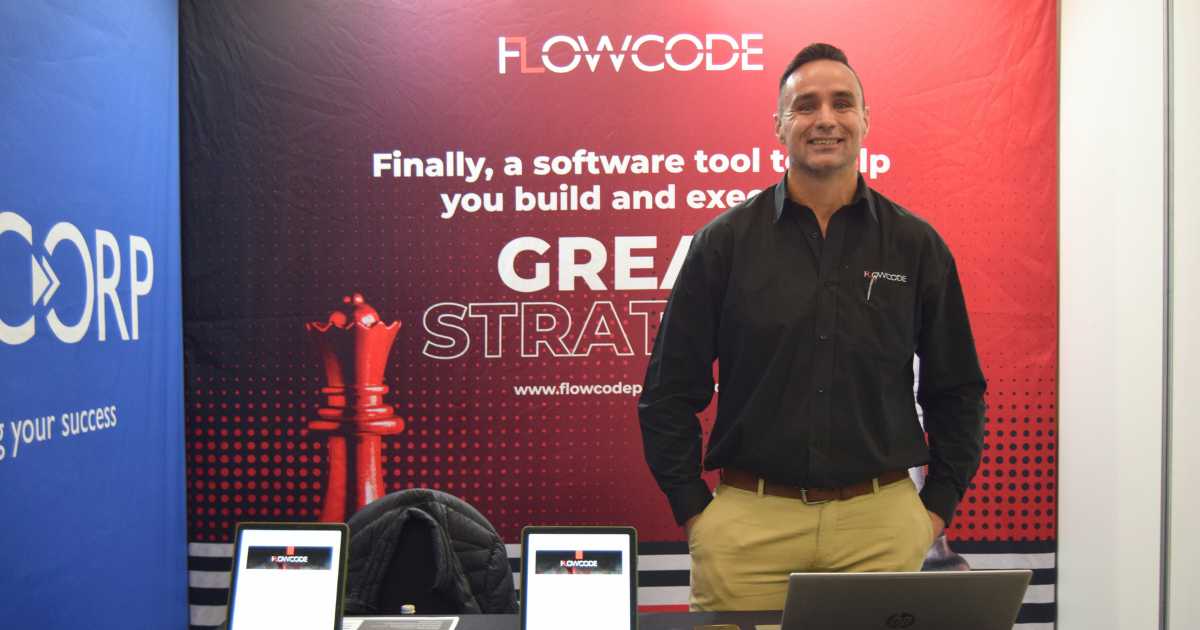
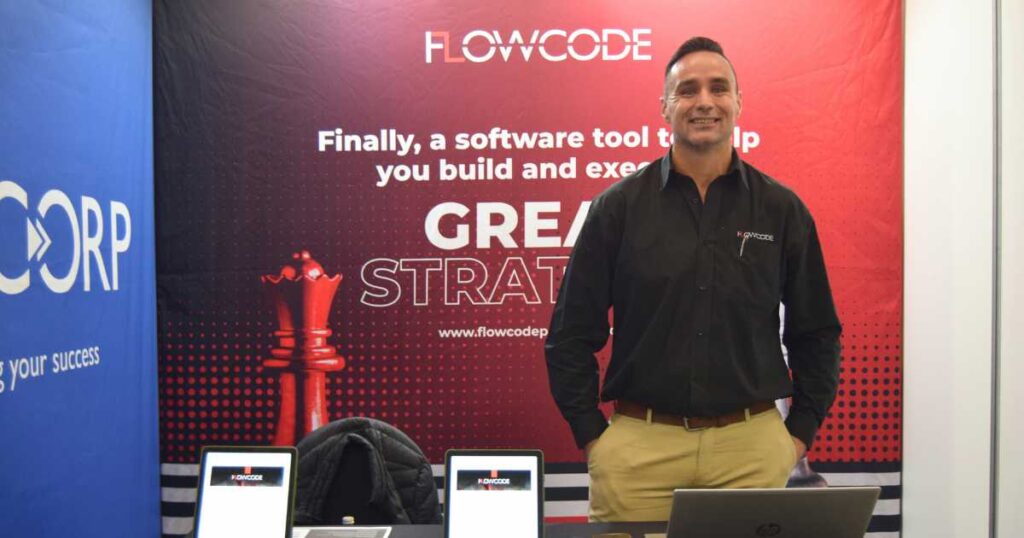
At the 2025 SME Funding Summit, Flowcode spoke on the importance of providing SMEs with a platform that enables them to build their companies from the ground up while leveraging digital platforms.
“We are here to help SMEs and entrepreneurs alike develop their business strategies. We give them a business coach and software that they can use to actually build their strategy, develop their strategy and help scale their business,” said Johnathan Ducie, Sales Lead at Flowcode.

What is a Business Strategy?

A business strategy is a roadmap that guides an organisation’s decisions, actions, and resource allocation to achieve its vision and mission. Key elements of a business strategy are:

  • Mission: A concise statement that defines the company’s purpose and core values.
  • Vision: A forward-looking statement outlining the company’s aspirations and desired future state.
  • Values: Principles that define how the company operates and interacts with its stakeholders and form the foundation of the company’s culture.
  • Goals: Specific, measurable, achievable, relevant, and time-bound (SMART) objectives that the company aims to achieve within a certain time period.
  • Competitive Advantage: Unique qualities or capabilities that distinguish your company from competitors.

What is Flowcode?

The Flowcode platform enables SMEs to create comprehensive business strategies. The platform uses a combination of advanced strategy tools with effective execution management to enable scaling with ease.

Some key features of the platform include:

  • Develop Business Strategies: Flowcode’s modular platform empowers SMEs to create business strategies effortlessly.
  • Team Collaboration: Flowcode enables a connected workforce by integrating external calendars, file sharing, and engagement tracking.
  • Real-time Insights: Monitor progress with analytics and reports for better decision-making.
  • Tailored Support: Flowcode offers each customer a trained business coach/consultant to help SMEs build and execute their business strategy.

How Flowcode Helps SMEs Unlock Funding

For many SMEs in South Africa, access to funding is a challenge. Some SMEs do not have the ‘data’ to highlight business growth and financial status, which can make demonstrating business viability an issue for them and their potential funders.

By leveraging Flowcode, SMEs have the opportunity to show growth through a digital platform. Because Flowcode monitors business growth and performance, funders can use this data to monitor how the business is performing and develop more tailored funding vehicles for SMEs.

“Where Flowcode can step in is to actually show you how to build a business, to actually grow your business, to make your business scalable. Then you can take that whole model and show somebody who’s a funder to go look at what you’ve built and look at what I’m doing from one source,” Ducie said.
For SMEs, a platform like Flowcode is not only there as an ‘ideas machine’, but also a comprehensive business development platform aimed at helping founders become more strategic thinkers, scale their businesses and navigate the tricky parts of owning a business.

“SMEs need to know that Flowcode is there to calm the chaos. We calm all the chaos for entrepreneurship, and we are for the entrepreneur,” Ducie explained.

Businesses Suited for Flowcode

The types of businesses that need a platform like Flowcode include:

1. Ready to Scale
Flowcode is ideal for businesses on the verge of growth that are looking for a platform that provides a clear roadmap to effectively and sustainably scale.

2. High-growth Companies
The platform is ideal for SMEs that are navigating a period of rapid growth. Flowcode ensures that strategic alignment and efficiency in execution are managed to maintain momentum.

3. Businesses in Turbulence
Flowcode not only helps businesses experiencing growth and success, but also those facing challenges. The platform provides proven strategies to help organisations break free from the ‘growth-collapse’ cycle and ensure they stabilise and thrive.

“We are looking to help the businesses that have an idea, and they’ve been running their business, but still need structure. Also, we want to help those struggling with operational challenges. We provide a business coach who can help them navigate any tough times,” Ducie concluded.

2025 SME SA Funding Summit: Innovation Hub Group

2025 SME SA Funding Summit: Innovation Hub Group

As small to medium-sized enterprises (SMEs) navigate digital transformation, the biggest hurdle can be the cost and finding the right digital business tools. Digital business tools are important because they enable SMEs to focus on running their business and increase profits, while technology takes care of the mundane tasks.

One of the more critical aspects of digital transformation is cybersecurity. Cybersecurity is important for all businesses to ensure that the business and its customers are protected. At the 2025 SME SA Funding Summit, Sean Twala of the Innovation Hub Group highlighted that cybersecurity is a growing risk for SMEs in South Africa.

“Businesses that have low turnovers or smaller businesses don’t usually take cybersecurity as something seriously. We are here to take care of SMEs and ensure their compliance with regulations and keep their businesses safe,” Twala said.

What is Cybersecurity for SMEs?

Cybersecurity is a foundational element of digital transformation for SMEs. It is the practice of protecting digital systems, networks, data and software from cyber threats like attacks, damage, data theft or unauthorised access.

Integrating cybersecurity measures from the start is crucial and involves more than just tools. SMEs need to train their employees, leverage multi-factor authentication and practice regular security updates.

SME founders might not always be aware of the best cybersecurity practices, and that’s where the Innovation Hub Group is helping.

What is the Innovation Hub Group?

The Innovation Hub Group is an end-to-end ICT solutions provider. The company’s services vary from ICT infrastructure deployment to enterprise internet and telephony solutions. Under its services, the company includes:

IT Solutions

End-to-end IT solutions that are tailored to match the needs of your business, whether through flexible monthly SLAs or on-demand support. IT solutions include desktop maintenance, firewall maintenance and IT hardware and installation. The Innovation Hub Group’s IT solutions begin at R189 per month for desktop maintenance up to R650 per month for server maintenance.

Server Hosting

The company’s server hosting solution enables users to access resources from anywhere, on any device. This helps reduce the need for SMEs to run expensive hardware infrastructure on their local network. Server hosting solutions are from R699 per month.

Web Hosting

Web hosting allows SMEs to post a website or web page on the Internet. The Innovation Hub Group’s web hosting services are secure and affordable, with a focus on hosted e-mail. Through hosted e-mail, SMEs can use Office 365, Microsoft Exchange, IMAP and POP. E-mail hosting is from R69 per month.

Internet Solutions

The Innovation Hub Group provides a range of Internet services, including fibre, microwave, wireless and LTE. The Internet solutions range from R299 per month for LTE and from R899 per month for business fibre.

Software Services

Software is important for digital businesses because it performs automated tasks, responds to hardware and responds to data requests from other software. The Innovation Hub Group’s software solutions are tailored based on your workflow and business needs. Software suites cost from R69 per month and vary, including customer relationship management (CRM) to remote management.

Power Back Up

With loadshedding causing so many operational disruptions for SMEs, backup power solutions are important. The Innovation Hub Group offers 3KVA 24V and 5KVA 48V backup power solutions, ensuring company PCs, servers and equipment with stable power during loadshedding. Backup power solutions are from R1599 per month for 24V and from R2219 per month for 48V.

Security Solutions

The security of your SME is very important to its operations. The Innovation Hub Group’s extensive cybersecurity solutions are suited for SMEs looking to secure their systems and data. The company’s security solutions leverage machine learning and automatic threat response technology to ensure data is secure. In terms of cost, its antivirus solutions are from R250 per annum.

Financial Services

Access to different types of funding is not always easy for SMEs, and with so many elements of the business needing capital, a simple loan won’t do the trick. The Innovation Hub Group offers flexible financing solutions to SMEs looking to procure hardware, software, maintenance and other services. The company’s financing solutions are tailored to each business, and the repayment period is flexible.
“We know that SMEs are looking for funding, but we want to make sure digital transformation and cybersecurity are affordable for them. Once they get their funding, we want them to see us as an affordable and trustworthy partner to streamline their businesses,” Twala concluded.

Sourcefin: Fit-for-Purpose Funding Solutions for SMEs

Sourcefin Fit-for-Purpose Funding Solutions for SMEs
As South Africa’s small to medium-sized enterprise (SME) ecosystem continues to grow, the need for more funding and financing solutions is also growing. Currently, SMEs are still mostly turning to traditional banks for funding; however, there are various alternative funding platforms that are gaining popularity with SMEs, one of which is Sourcefin.

What is Sourcefin?

Sourcefin is a South African fintech company that specialises in providing purchase order funding and invoice discounting to SMEs. The company has a full-service solution that includes helping businesses secure funding, source goods, manage logistics, and provide expert guidance to fulfil purchase orders.

At the 2025 SME South Africa Funding Summit, Sourcefin’s Chief Strategy Officer, Jedd Harris, said, “Alternative funding is still new but gaining popularity. The normal entrepreneur on the street looks for funding or a loan from traditional banks; you hardly hear them say, “I need merchant advance or invoice discounting, but those solutions are slowly gaining popularity.”

Access to Funding Still a Challenge

With an estimated 3,5 million SMEs in South Africa, the challenge of access to funding is still a barrier for many small businesses. Traditional banks often have long waiting periods, excessive paperwork and strict lending criteria, making it difficult for small businesses to access the capital they need.

The growth of tailored financing options means SMEs can now access financing solutions that can better meet the needs of their businesses. This financing is specifically designed to meet the unique challenges of SMEs and is more flexible and accessible than traditional financing options.

“Most SMEs don’t realise that there are fit-for-purpose funding solutions that suit their business and its needs. It’s not about taking loans anymore, it’s about what the specific need of the business is and which instrument fits better for your business,” Harris explained.

How Sourcefin is Bridging the Funding Gap

Harris elaborated that Sourcefin uses a collaborative approach with SMEs when it comes to their funding needs, including:

  • Education: Sourcefin prioritises educating SMEs about alternative funding solutions, making it easier for them to access the right type of funding.
  • Building trust and partnership: Sourcefin positions itself as a strategic partner to SMEs and works closely with them to understand their funding needs and help them find the most suitable funding solutions.
  • Diverse funding solutions: Sourcefin offers SMEs a range of alternative funding options that are developed to suit their unique needs.

“At Sourcefin, we offer open-minded funding; we call it fit-for-purpose funding. While most traditional lenders are still looking at collateral but in most early-stage businesses, they don’t have it. At Sourcefin, we look at your future, the opportunity and back you according to your potential,” said Harris.

What Sourcefin Offers SMEs

Sourcefin has two funding solutions on offer for SMEs: purchase order funding and invoice discounting.

Purchase Order Funding

The purchase order funding option from Sourcefin has the following features for SMEs:

  • Can help SMEs fulfil large purchase orders such as tenders.
  • Specialist sourcing support to help SMEs meet client expectations on every purchase order.
  • Provides strategic support to help the SME grow as it receives large purchase orders.
  • Provides logistics support to help SMEs fulfil orders
  • Project management support to help SMEs fulfil orders on time and to the correct requirements.

Apply for Sourcefin Purchase Order Funding

Applying to Sourcefin is easy and can be done online. You will need the following:

  • First name
  • Phone number
  • E-mail address
  • The total amount of funding you need
  • What do you need the funding for

Once you have sent in your application, Sourcefin will get back to you within 48 hours.

Invoice Discounting

Invoice discounting is a type of funding that allows SMEs to gain instant access to capital that is tied up in invoices they have submitted. Invoice funding from Sourcefin can be approved in as fast as 24 hours from application.

Apply for Sourcefin Invoice Discounting

To apply for invoice discounting from Sourcefin, you need to do the following:

Step 1: Application

Answer a few simple questions that will help you determine if Sourcefin is the right platform for you. Following that, you will need to provide basic business and personal information. The final step is to provide details on the invoices you have outstanding.

Step 2: Approval

Once your application has been approved, a Sourcefin consultant will contact you to help you understand all the details of the financing deal and what costs come with it.

Step 3: Post-approval Support

Once your invoice finance is approved and you understand all details of the deal, Sourcefin will pay you a portion of the invoice value. The company will also keep track of the expected payments and follow up with your clients if necessary. Lastly, Sourcefin will let you know once the invoice has been paid, deduct its original advance plus any interest and pay the remaining balance into your account.

“We see the SME landscape as a positive sum-game, and we know that if we can’t provide the funding you need, we have partners who can. It’s going to take a village to close the funding gap, but we can see that there are platforms and banks willing to bring funding to SMEs and enable their growth,” Harris concluded.

FNB Bets on Digital Banking to Unlock SME Growth

FNB Summit article

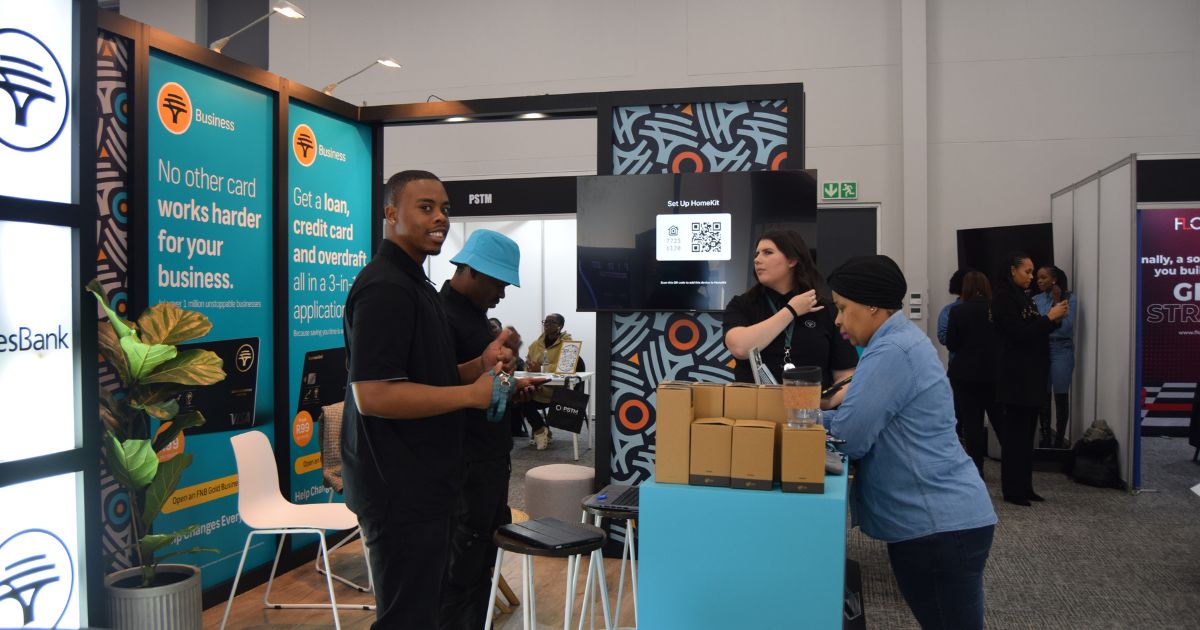
At the 2025 SME South Africa Funding Summit, leading financial institutions and funders asserted their commitment to supporting the growth and sustainability of South Africa’s small to medium-sized enterprises (SMEs). Among the key contributors was silver sponsor FNB, which highlighted the role of digitalisation in addressing the funding gap and driving SME resilience.

At the summit, Louise Naidoo, SME Lending Product Head at FNB Commercial, emphasised the importance of building a deeper relationship between banks and SMEs with the goal of creating better access to funding and sustainable SMEs.

“Banks are often the first choice for SMEs, but they experience negative outcomes due to declined funding requests. Successful and sustainable funding relationships require a partnership between banks and SMEs,” Naidoo said.

Bridging the SME Funding Gap

There are an estimated 2,6 million to 3,5 million SMEs in South Africa. These businesses play a vital role in job creation and economic growth. However, despite their growing importance, many SMEs still struggle to access financial support.

According to the 2025 South African MSME Access to Finance Report, 85,6% of all funding applications came from micro-enterprises, which are businesses with a turnover of less than R1 million per year. As much as these businesses are creating jobs (over 80% of jobs created in South Africa), they are still underfunded.

FNB believes that improving access to finance for SMEs is dependent on digital enablement and funding readiness. The bank’s commercial offering aims to streamline access to credit, provide funding solutions, offer various business tools and provide access to markets.

“We really want to demonstrate that, from an FNB perspective, we genuinely are here to help and listen. We want to help businesses with those complicated things and streamline funding opportunities for them,” explained Naidoo.

Digitalisation vs Digitisation: What SMEs Need to Know

With so many new technologies such as cloud computing, artificial intelligence (AI) and machine learning, SMEs are in a race to catch up to the rest of the world. These new technologies have the potential to unlock growth and sustainability for SMEs, however, there is a need to clarify the difference between digitalisation and digitisation.

Digitisation is the process of changing from analogue to digital form. Also known as digital enablement, digitisation takes an analogue process and changes it into digital form, with any changes to the process itself.

On the other hand, digitalisation is the use of digital technologies to change a business model and provide new revenue and value-producing opportunities, such as alternative funding instruments.

In simple terms, SMEs need digitalisation to enable them to become digital businesses in a digital economy, and that’s where FNB’s commercial banking solutions can help.

“Digitalisation is not just a trend; it’s a huge shift. And the sooner SMEs make use of the tools available and all of the digital solutions, the more these tools can help them with access to funding,” Naidoo explained.

Betting on Digital Tools for SME Growth

In South Africa, the SME sector is largely cash-driven despite an increase in the adoption of digital financial services and tools. This limits the ability of the SMEs to build a digital financial footprint, crucial for securing financing.

Naidoo noted that although some SMEs are leveraging digital financial tools, many remain on the sidelines. To address this, FNB has tailored its app to enable SMEs to apply for funding directly, a process that not only streamlines applications but also allows the bank to gain a clear picture of the SMEs financial footprint. This digital footprint is key to improving credit assessments.

Another tool by FNB is the app’s payment feature, which allows SMEs to generate QR codes for customer payments. Every payment processed on the app strengthens the SME’s financial history, and that data can be used to tailor financing solutions such as merchant cash advances.

“By focusing on the right tool(s) and using them effectively, SMEs build up a good credit record. When it comes time to apply for funding, banks can understand the transaction patterns and growth, making it easier to approve funding,” says Naidoo.

Funding Readiness and Banking Relationships

Another element of FNB’s presentation was funding readiness. Funding readiness is how prepared a business is to secure funding or investments. Many SMEs struggle with not only accessing funding but also getting their businesses in a position to qualify for funding.

Naidoo explained that FNB is committed to not only providing access to funding but also education and awareness on digital tools. The bank aims to equip SMEs with knowledge on how to use accounting tools, payment features and build a good credit score that builds trust with banks and other financial institutions.

“The funding journey is not just a once-off transaction. There are various funding solutions designed to help SMEs throughout their life cycle. It’s important that SMEs are ready for this journey and leverage the available tools,” she explained.

Role of Education in SME Digitalisation

During her presentation, Naidoo highlighted that a lack of awareness or understanding around digital financial tools was a growing concern. The current skills gap, along with limited digital infrastructure in South Africa, means many SMEs are not able to fully use the available technology.

Digitalisation not only helps entrepreneurs, but in South Africa, it is also a catalyst for skills development and broader economic inclusion.
To help SMEs become familiar with technology, FNB is committed to driving awareness and education. This includes efforts in training on payment platforms and guidance on how to build a strong credit profile, all of which contribute to funding readiness.

The 2025 SME SA Funding Summit was not only a way to tackle challenges in funding but also to open a dialogue between SMEs and funders. With stakeholders such as FNB investing in financial education and access to funding, the funding gap can be smaller for SMEs.