The small to medium-sized enterprise (SME) sector in South Africa is thriving and significantly contributing to the growth of South Africa’s economy. According to stats, there are over 2 million SMEs in South Africa, and the sector contributes roughly 34% to 40% of the GDP and employs approximately 60% of the workforce.
However, there is a large number of SMEs that fall into a gap that prevents them from accessing financing/funding mechanisms. These businesses are called the ‘missing middle’.
What Exactly Is South Africa’s “Missing Middle”?
As much as SMEs are growing and thriving in a tough economic environment, a big chunk of these businesses that cannot access funding is the ‘missing middle’. The ‘missing middle’ refers to established, growth-oriented small businesses with annual turnovers between R1 million and R100 million that are too large for microfinance, yet too small or risky for traditional bank loans and venture capital.
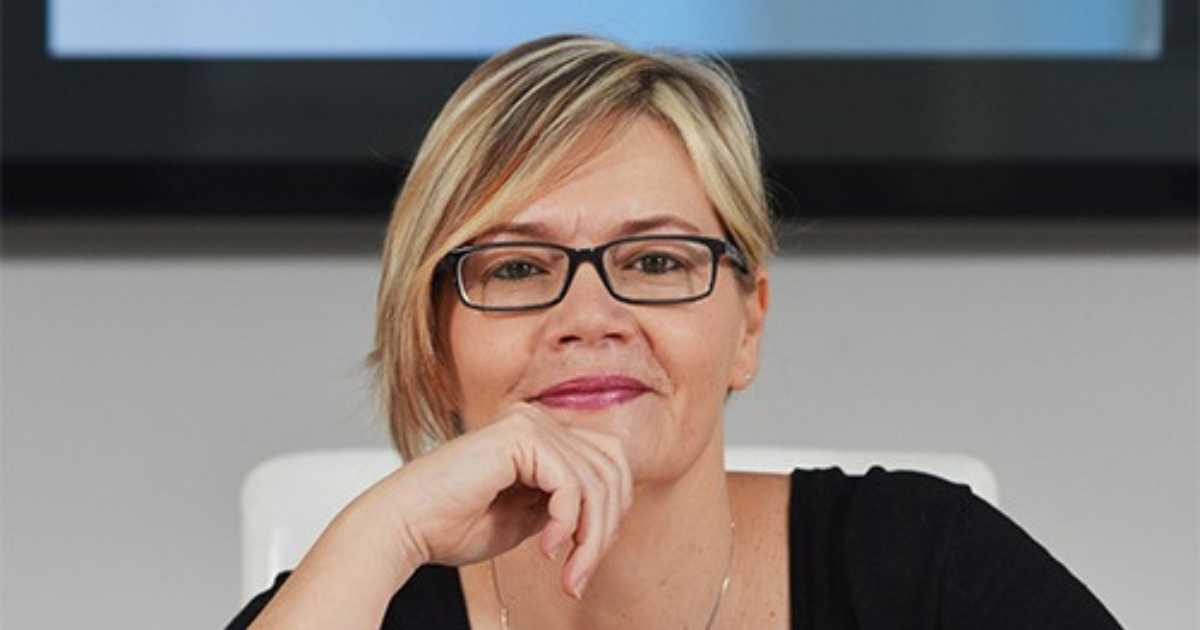
In preparation for the upcoming 2026 SME Funding Summit, keynote speaker Darlene Menzies, CEO of Finfind, said, “There is a lot of talk about the ‘missing middle’ – those businesses that are too big for micro-loans but still too small for corporate investment. They are too large for micro-finance but too small or risky for mainstream bank loans, leaving them underserved by traditional funding channels.”
A Credit Gap Measured in Millions of Businesses
The ‘missing middle’ makes up 85,6% of businesses in the sector and accounts for more than 80% of the jobs, yet they are the most underserved by lenders. Broken down into numbers, these enterprises represent an estimated 1,1 million formal firms and over 2 million informal firms, which fall into this gap and represent South Africa’s largest untapped market potential.
The businesses in this gap are victims of consequences because traditional banks and direct foreign investment (DFI) see them as high risk due to a lack of factors, such as a lack of formal financial records and collateral. This ‘missing middle’, although a significant contributor to employment and the economy, continues to struggle to access funding, making the issue much less nuanced than others may perceive.
Menzies emphasises this by saying, “Only 5% of formal SMEs currently have access to credit, according to the MSME Finance Gap report, despite 84% being technically ‘financially included’. This is how the gap was created and continues to widen without policy intervention.”
Why Financial Inclusion Is Not the Same as Access to Credit
Financial inclusion in South Africa, while improving, primarily refers to access to basic transaction banking services. It does not equal or guarantee access to credit for SMEs. High concentration in the banking sector, strict collateral requirements, and poor financial records create a ‘missing middle’ gap, restricting funding for businesses. Menzies says, “There’s a big difference between having a bank account and being able to borrow against it.”
She explains that there is still a while to go before this gap is closed; however, the development of new government policies, such as the MSMEs and Co-operatives Funding Policy published in February 2025, which has the right intentions, financial education, credit guarantee schemes, and expanded DFI lending.
What would actually move the needle?
- A national SME data and credit registry that captures alternative data (digital transaction histories, mobile money flows, trade credit records, etc.), as well as current and previous credit extension and historical payment behaviour.
- Government guarantees cover 50%-70% of first-loss risk on SME portfolios, which makes the risk-adjusted return attractive to commercial lenders.
- Tax incentives for banks that meet SME lending targets.
“If we don’t solve the missing middle problem, we’re not just failing businesses. We’re failing an entire generation of job seekers. This isn’t an economic problem; it’s a social stability problem,” emphasises Menzies.
There Is Hope — But It Requires a Different Model
Despite the scale of the missing middle challenge, Menzies is clear that South Africa is not starting from zero. What is emerging, albeit too slowly, are blended finance models that align public and private capital in ways that make SME lending viable without being reckless.
“There is some hope, though,” Menzies notes.
She points to recent examples where development finance institutions absorb early-stage risk, allowing commercial banks to extend credit to businesses they would otherwise exclude.
“Examples of models that can work include the IFC and FirstRand partnership announcement in September 2025 of a R1,8 billion facility specifically for underserved MSMEs.”
The strength of these models lies in their structure, not their scale. Menzies says, “Development finance providing first-loss cover, commercial banks providing distribution and relationship management, and MSMEs getting access.”
According to Menzies, this kind of risk-sharing architecture is precisely what is needed to unlock lending at scale, particularly for businesses that lack collateral but have viable operations and growth potential. Without it, private lenders will continue to avoid the segment, regardless of policy intent or public rhetoric.
South Africa has just four years left to meet the National Development Plan’s employment targets, with small businesses expected to carry the bulk of that responsibility. Yet millions of viable enterprises remain locked out of formal credit, not because they are unbankable, but because the system is not designed for their reality.
As Menzies makes clear, solving the missing middle is not a future consideration — it is an urgent economic and social imperative. The consequences of inaction extend far beyond balance sheets, affecting job creation, social cohesion and long-term stability.
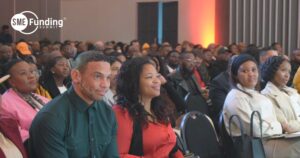
These issues, and the practical solutions required to address them, will be unpacked in greater depth when Darlene Menzies takes the stage as keynote speaker at the 2026 SME Funding Summit, where funders, policymakers and business owners will be forced to confront a simple truth: if South Africa fails its missing middle, it fails its growth ambitions with it.